
Sēkr
Enhancing the Camping Experience with AI
How Quave rebuilt Sēkr for desktop and mobile and connected its camping-location data to a conversational trip-planning experience.
A community product that needed a new foundation
Sēkr helped campers find overnight stops, plan routes and meet other travelers. Its product held more than 60,000 locations, including free campsites, RV parks and boondocking spots, with many of the photographs and reviews contributed by the community. After a period without updates, Harley Sitner and Jordan Schwartz acquired the product in late 2023 and set out to bring it back into active development.
The brief included an AI-assisted trip planner, a desktop experience and a launch before the summer camping season. The existing architecture could not support that direction without extensive work, so the project moved to a fresh foundation instead of layering the new experience onto brittle code.
Planning with product data and public context
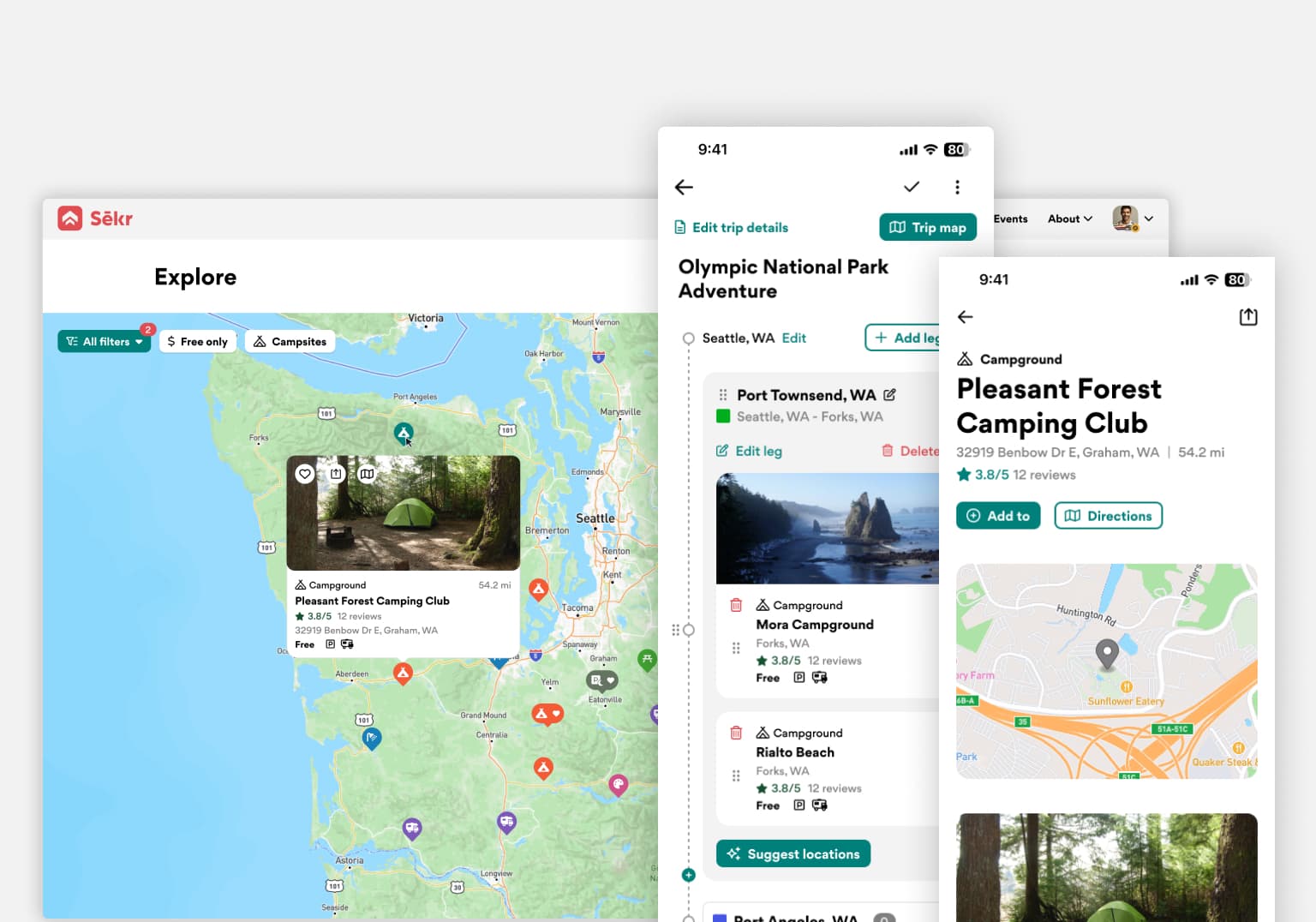
Quave rebuilt the application with Meteor so desktop and mobile could share one codebase. The trip planner uses a retrieval-augmented approach with Qdrant: it searches for locations that match a traveler’s request, then provides that context to a language model that assembles an itinerary. Public sources and external APIs fill gaps where Sēkr’s own database does not contain enough detail.
The interaction was designed around how people actually plan. A traveler may let the assistant draft a route, build one manually, or combine the two by asking for ideas on a single leg. Trips planned on a laptop remain available on a phone once the traveler is on the road. The map, search and location pages were also refreshed as part of the rebuild.
When a traveler or community member adds a place that is not yet complete in Sēkr’s data, the product can retrieve images, descriptions and reviews from Google Places. That supporting work stays behind the same simple planning interface.
A working release before summer
The rebuilt product launched in under three months. Sēkr returned with conversational trip planning, a consistent desktop and mobile experience, and its community location data at the center of the workflow. The published case lists web and mobile development, UI/UX design, DevOps, zCloud and performance analysis among the services involved.
The release gave campers a new product foundation centered on the existing location data, with AI supporting trip planning inside the same web and mobile experience.
“Quave brought Sekr back to life, delivering exactly what we needed in record time. From AI-driven trip planning to a seamless cross-platform experience, they rebuilt our app with modern features.”
A first conversation